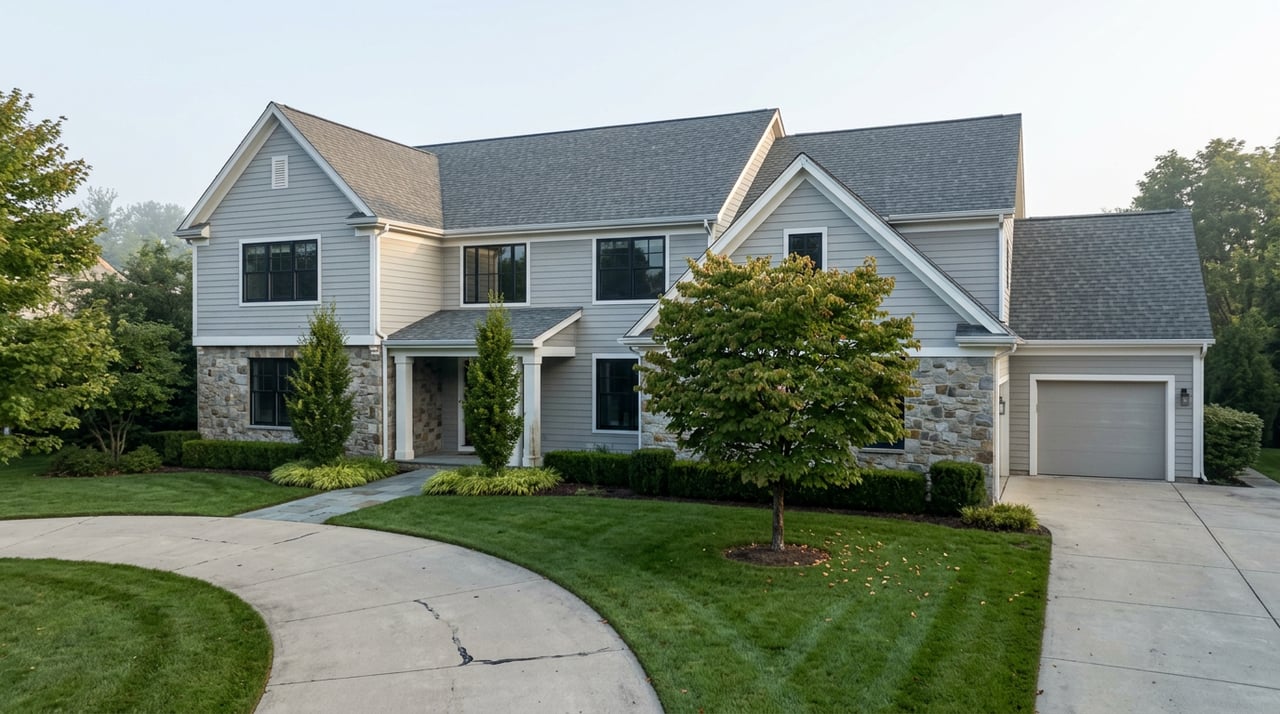
Phase 3 of One Kingsland is the last opportunity to buy new townhome construction at Edge-on-Hudson, and the sales record shows why. Ninety townhomes were planned for the neighborhood at 405 Legend Drive, Phase 1 sold out within six months of its May 2025 launch, Phase 2 sold 27 of its 28 homes since a November 2025 release, and Phase 3's 32 homes are now nearing completion with pricing that starts at $2 million. Once these close, Sun Homes has no more townhome inventory left to sell on this site.
The paperwork side of the purchase also shifts once a phase like this sells through, and it is worth understanding alongside the timeline. A buyer signing a contract this fall isn't just buying a finished home in a finished community. They're buying into a New York offering plan, mid-transition from sponsor control to owner control, at a moment when the numbers on the page are still projections rather than lived history. That distinction matters more than the calendar deadline, and it's the part worth understanding before anyone sits down at the sales gallery on Legend Drive.
The document that actually governs the sale
New homes sold directly by a developer in New York aren't sold the way a resale house in Sleepy Hollow proper changes hands. They're sold under an offering plan, a disclosure document filed with the New York Attorney General's Real Estate Finance Bureau under the Martin Act. Nothing can be marketed or sold until that plan is accepted for filing, and once it is, the plan itself, not the rendering on the website or the finishes in the model unit, becomes the sponsor's entire legal offer.
That has a practical consequence for a One Kingsland buyer. The floor plans, the clubhouse description, the finishes list, all of it exists inside the plan's Schedule A. If a piece of marketing material promises something the plan doesn't, the plan wins. Attorneys who handle these closings routinely tell buyers not to rely on brochures or renderings for exactly this reason. The fix is simple and unglamorous: read the plan, or have a real estate attorney read it, before the purchase agreement is signed rather than after.
Whose budget is on the page right now
Every offering plan includes a Schedule B, the sponsor's first-year projected operating budget for the association. That number is where the quoted homeowner association fee for One Kingsland, reported in the $760 to $810 a month range, actually comes from. It's a sponsor projection, not a resident-negotiated figure, because the resident board hasn't taken over yet.
That distinction becomes important once a phase finishes selling and control begins shifting from the sponsor to a homeowner-elected board. If the first-year budget underestimated costs, real ones, the kind that show up in landscaping, insurance, or clubhouse upkeep, the incoming board can face a shortfall it didn't create and has to solve with either a special assessment or a jump in monthly fees. A buyer closing during this transition window is closing into that risk more directly than a buyer who purchased two years earlier or a resale buyer who purchases after the board has already tested and adjusted the budget. Asking directly when sponsor control is expected to end, and asking to see the reserve study behind the number, is a fair question to bring to the sales office rather than to figure out after the closing.
One fee, or two
Edge-on-Hudson is built as a single master-planned community with individually managed pieces inside it. One Kingsland has its own clubhouse, a 75-foot outdoor lap pool, and a 1,200-square-foot fitness center that only its own homeowners use, all covered by that sub-association fee. But the site also carries shared infrastructure across all 1,177 planned units: the Riverwalk promenade, the retail plaza, the parkland bordering Kingsland Point Park, and the new North Meadow slated to begin construction this year. Communities built this way typically run on a two-tier structure, a master association covering the shared waterfront and site-wide amenities, and sub-associations covering each individual building or street's private amenities.
The number quoted at the sales gallery may or may not be the complete monthly obligation. Before signing, it's worth asking specifically:
- Is the quoted HOA fee the sub-association charge alone, or does it already include a master association assessment
- What does the master association fund, and is that assessment fixed or expected to rise as North Meadow and the remaining retail buildout come online
- Who holds the reserve study for each association, and when was it last updated
- What is the current sponsor-to-owner control timeline for the One Kingsland sub-association board
None of these questions are unusual to ask. They're the same ones a real estate attorney would raise during offering plan review, and getting the answer in writing before closing is worth more than getting it verbally at the sales table.
A tax rate that belongs to this address, not to the village
Annual property taxes at One Kingsland are projected at 1.66% of sales value, a rate described as a hybrid of Town of Mount Pleasant and Village of Sleepy Hollow rates negotiated in advance for this specific site. That's not the standard assessment formula a buyer would encounter purchasing an existing single-family home elsewhere in the village. It's a rate specific to Edge-on-Hudson's tax arrangement with the two municipalities, built around the site's particular jurisdictional overlap.
That negotiated status is worth understanding rather than assuming away. A rate that was fixed through negotiation is a rate that was fixed for a reason, tied to a particular assessment structure or timeline. Buyers should ask their attorney to confirm how the 1.66% figure was arrived at, whether it is locked for a defined period, and what triggers a reassessment. A rate that compares favorably today because it was negotiated in advance is only useful information if a buyer also knows what happens when the terms of that negotiation run out.
What closing out the final phase actually accelerates
Multi-phase developments normally give the sponsor board control for years while later phases are still selling. Edge-on-Hudson's overall master plan has room to run, with a medical office building expected to break ground this year and additional retail signings still coming. But One Kingsland itself, as the final townhome neighborhood on the site, doesn't have that runway. Once Phase 3's 32 homes close, there's no future phase inventory left to justify extending sponsor control over that sub-association. The handoff to a resident-elected board happens sooner than it would in a project with more phases left to sell.
That means a buyer signing now is closer to the handoff date than a Phase 1 buyer was in 2025, and closer to it than most new-construction buyers typically are. The reserve funding decisions, the vendor contracts, the maintenance schedule the sponsor sets up in these final months are the ones the incoming board inherits and has to live with. Asking to see the reserve study and the current state of the reserve fund, not just the projected monthly fee, is the single most useful thing a Phase 3 buyer can do before signing.
A few questions worth asking before you sign
Does the sales gallery's $2 million-plus starting price include the river-view premium, or is that separate? The Ainsley and Hendricks models carry views of the Hudson, Kingsland Point Park, and the 1883 Sleepy Hollow Lighthouse that earlier, less expensive models in Phases 1 and 2 didn't offer. Confirm which model and which orientation the quoted price reflects.
If I want to see how the community's finances have actually performed, not just projected, can I ask? Yes. The Daymark and the Toll Brothers-built brownstones and lofts on the same site have been operating long enough to have real financial history. Their sub-association's actual costs versus first-year projections are a reasonable proxy for what a newer sub-association might experience.
Is the $4.6 million the developer paid to the Village of Sleepy Hollow this year relevant to my purchase? Not directly to a homeowner's monthly costs, but it signals where the overall project stands. That contribution was triggered when the community crossed the halfway mark on certificates of occupancy across all 1,177 planned units, which is a reasonable gauge of how much of the master plan's shared infrastructure is still being built out around any given phase.
The paperwork behind a home this specific rewards being read closely rather than taken on faith. If you're weighing a purchase at Edge-on-Hudson, or trying to understand how a property like this compares to resale options elsewhere in Sleepy Hollow, Lizette Sinhart can walk through the offering plan, the association structure, and what the numbers actually commit you to before you sign anything.